Call Center Interview Questions and Answers for No Experience
By Dave Wilson · 9 min read · 16 September 2026
If you have never worked in a call center, the four questions below are the ones that decide most first interviews, and none of them actually require experience to answer well. Call centers hire for trainability and composure far more than for a matching job title on your resume, because the skills the job needs, staying calm, communicating clearly, following a process under pressure, show up in retail, school, food service, and everyday life just as much as they do in a previous call center role. This page covers why each question gets asked, how to structure an answer, and a real sample answer you can adapt, not a generic corporate line.
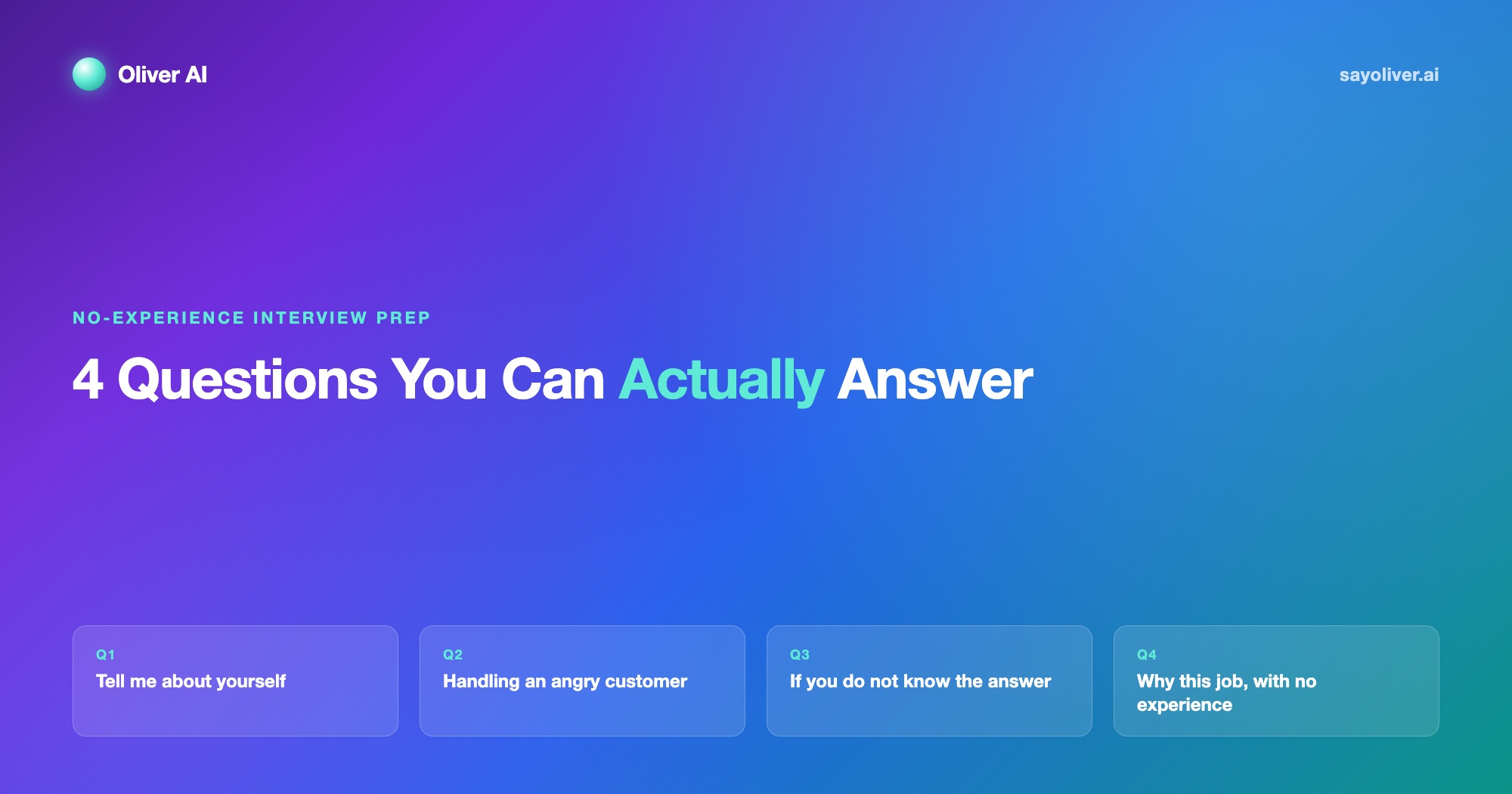
"Tell me about yourself" when you have nothing call-center to point to
Nearly every call center interview opens with this question, and it is the one candidates over-prepare for in the wrong direction, memorizing a life story instead of a structure.
Why they ask it
This is rarely about your history in detail. Recruiters are listening for whether you can organize a short answer under mild pressure, since that is close to what the job actually requires: staying structured while someone is listening to you in real time. For a no-experience candidate specifically, they are also checking for any transferable skill they can hang the rest of the interview on.
How to answer
Use three parts and keep it under thirty seconds spoken out loud: the closest thing you have to customer-facing or communication experience, one or two traits the role actually needs, and why you are applying now. Do not apologize for having no call center background, name what you do have instead.
Sample answer
"I just finished my associate degree and worked part-time at a retail store during school, where I handled returns and answered questions at the counter most days. I am used to staying patient with people who are frustrated, and I pick up new systems quickly. I am applying here because I want steady hours and a role where I am talking to people every day, which is what I liked most about retail."
"How would you handle an angry or demanding customer?"
This is the question that most decides whether a no-experience candidate gets an offer, because it is the one skill the job cannot function without and the one no amount of confidence can fake convincingly.
Why they ask it
This is not a trick question, it is the job. A recruiter is checking whether you will take a hostile call personally and escalate it, or whether you can stay level and keep working the problem. It is usually the single most important question in a no-experience interview because it cannot be faked with confidence alone.
How to answer
Structure your answer the way you would actually structure the call: acknowledge the feeling first, then explain what you would do, in that order. Avoid a general claim like "I stay calm under pressure" on its own, since every candidate says that. Give one sentence that sounds like something you would actually say to the customer, not just about yourself.
Sample answer
"I would let them finish explaining without interrupting, since most people just want to feel heard before anything else. Then I would say something like, that sounds really frustrating, let me see what I can do to fix it, and walk them through the next step clearly. I would not take it personally, since they are usually upset with the situation, not with me specifically."
Practice the angry customer question before the interview, try it now, no sign-up needed.
Practice the angry customer question before the interview"What would you do if you don't know the answer?"
Nobody expects a trainee to know everything on day one, which is exactly why this question is not really about product knowledge at all.
Why they ask it
This question exists because guessing confidently is worse than admitting you do not know yet, and every new hire will hit this exact moment in their first week. Interviewers are checking for honesty over bluffing, since a made-up answer to a real customer can cause a real problem later.
How to answer
Say plainly that you would not guess, then name what you would actually do: check the resource you have, ask a teammate or supervisor, or tell the customer you will find out and follow up. Ending on a concrete next step, not just "I would ask for help," is what makes the answer land.
Sample answer
"I would tell the customer honestly that I want to give them the right answer rather than guess, and that I am going to check with someone who knows or look it up. If I could not resolve it on the spot, I would let them know exactly when I would follow up, and make sure I actually did."
"Why do you want to work in a call center if you have no experience?"
A version of this question closes almost every entry-level interview, and a vague answer here can undo an otherwise strong conversation.
Why they ask it
Call center roles have historically high turnover, so interviewers are trying to separate candidates who picked the job on purpose from candidates who will leave the moment something else comes along. "I need a job" is honest but does not answer what they are actually asking.
How to answer
Name one specific, real reason: stable hours, the training program, the growth path into a specialist or team lead role, or that you already know the product as a customer. Specific and honest beats a generic "I like helping people" every time, because every applicant says that line.
Sample answer
"I have not worked in a call center before, but I have always been the person friends ask to sort out a confusing bill or a return, and I am good at it. I also want a role with real training and a path to grow, rather than something with no direction, and this account is one I have used myself, so I already understand the kind of issues customers call in about."
Practice the angry customer question before the interview, try it now, no sign-up needed.
Practice the angry customer question before the interviewQuick tips for success
Alongside the four questions above, a handful of small, mechanical things change how any of these answers land in a real interview, especially one done over the phone or on video.
- Speak a little slower than feels natural. Nerves speed everyone up, and a rushed answer reads as less confident than a measured one, even when the content is identical.
- Project confidence through your voice, not your vocabulary. On a phone screen the interviewer cannot see you, so tone, pace, and a steady volume are doing all the work a handshake and eye contact would normally do.
- Do not apologize for having no experience more than once. Say it plainly the first time it comes up, then move straight to what you do bring. Repeating the apology just reminds them of the gap.
- Have two questions ready for the interviewer, about training length, the account, or what a typical first month looks like. Having none reads as disinterest, and it is the easiest fix on this whole list.
- If a question catches you off guard, take a breath and say so plainly, "let me think about that for a second," rather than filling the silence with filler words. A short pause reads as considered, not weak.
Frequently asked questions
Can I get a call center job with no experience?
Yes. Most entry-level call center roles are built around a paid training and nesting period specifically because they expect to hire people without prior call center experience. What they are screening for is communication, composure, and trainability, all of which show up in retail, school, or everyday customer-facing situations, not a matching job title.
What is the most common interview question for a call center job with no experience?
"How would you handle an angry or demanding customer" comes up in nearly every first interview, because it is the closest thing to the actual job that can be tested without hiring you first. The answer that works acknowledges the customer's feeling before it explains what you would do about it.
How do I answer "why should we hire you" with no call center experience?
Point to a specific transferable strength, staying calm under a queue of people waiting, communicating clearly, learning new systems fast, backed by one concrete example rather than a general claim of being a people person. Interviewers are evaluating whether you can do the job, not whether your resume already says "call center."
Will I be asked to do a mock call if I have no experience?
Often, yes, either inside the interview itself or as a separate round during the assessment battery. Having no experience is expected going in; you are not given real policies or a real system, and interviewers know it. Mock call interview questions and answers covers exactly what that round looks like and what to say when you have no script.
How do I prepare for a call center interview with no experience in one week?
Write one real, specific story for the angry-customer and going-above-and-beyond style questions, pulled from any customer-facing situation you have actually had. Practice your answers out loud rather than only in your head, since pace and tone only reveal themselves when spoken. And if the process includes a mock call, rehearse that format specifically rather than treating the real interview as your first attempt.
None of the four questions on this page require call center experience to answer well, because none of them are actually testing for it. They are testing whether you can stay structured, honest, and calm under mild pressure, which you already have evidence of from somewhere, even if that somewhere is not a call center. Write your real answers down, say them out loud, and if the process includes a live mock call, rehearse that specifically before the day it counts.
See it in Oliver
Related reading
Keep going.
Ready when you are
Practise before the next real conversation.
No sign-up required. Pick the scenario, add your name, and speak with a realistic AI partner. Get a scorecard and transcript after every call.