How to Handle Sales Objections
By Dave Wilson · 6 min read · Updated 5 July 2026
Knowing how to handle sales objections is what separates reps who close from reps who keep getting told the deal is dead. Every objection is information — about the buyer's real concerns, who else is in the room, and whether the deal was qualified properly in the first place. The reps who consistently win deals do not avoid objections. They invite them, then respond in a way that moves the conversation forward.
What a sales objection actually is
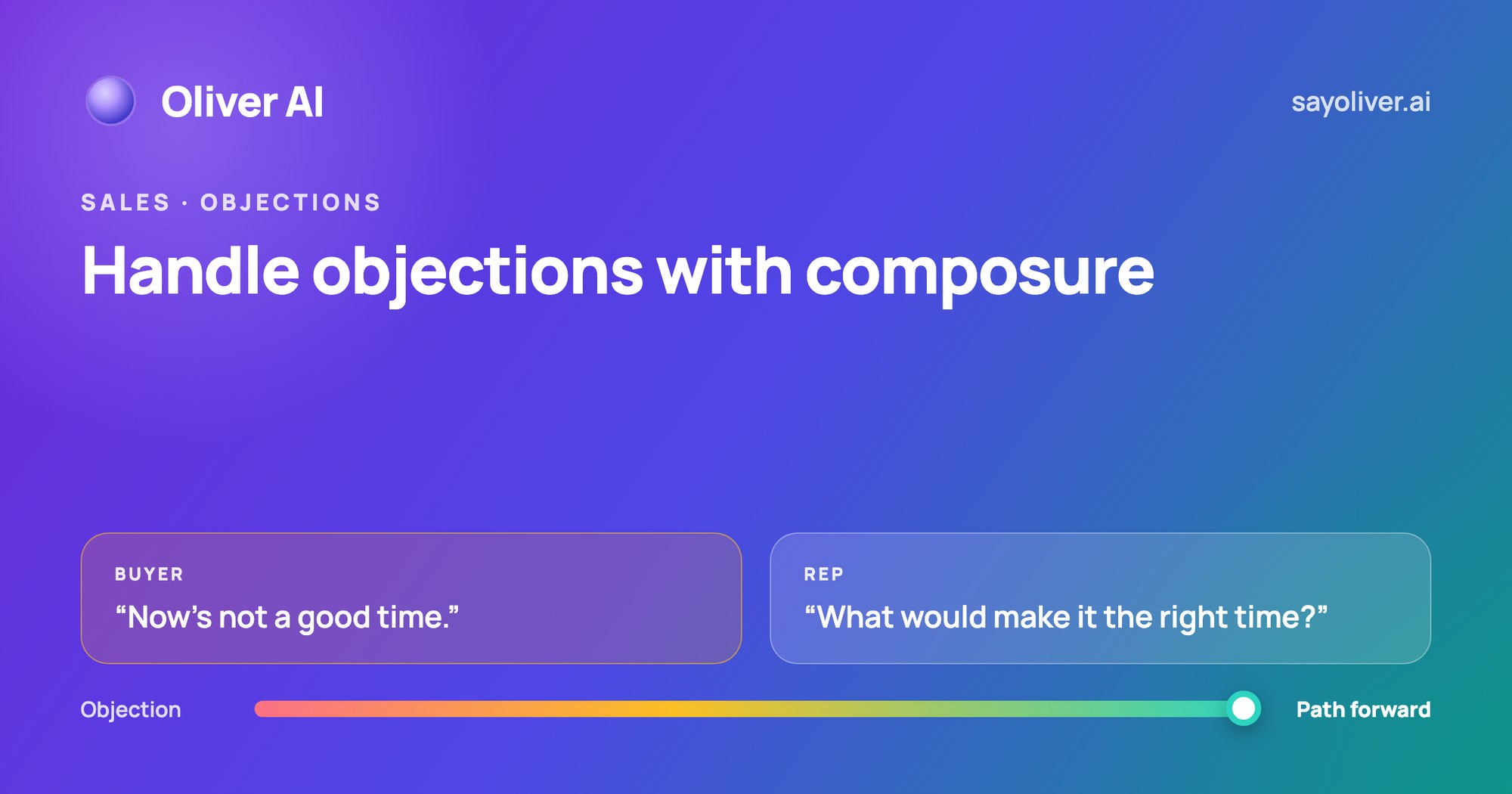
An objection is not a rejection. It is the buyer telling you, in their own way, what would have to be true for them to move forward. When a prospect says "it's too expensive", they are not saying no — they are raising a price objection, saying "I don't yet see enough value to justify this price."
This distinction matters because it changes how you respond. Treating objections as obstacles to overcome puts you in opposition to the buyer. Treating them as information puts you on the same side of the table.
The four main types of objection
Almost every objection a sales rep hears falls into one of four categories. Recognising which one you are dealing with changes how you respond.
Price
The buyer is questioning whether the cost is justified by the outcome.
Timing
The buyer believes the problem is not urgent enough to act on right now — often a version of the no-budget objection.
Trust
The buyer is unsure whether you, your product, or your company will actually deliver.
Authority
The buyer is not the person who can make the decision and is hesitant to advocate internally.
Practise objection handling, try it now, no sign-up needed.
Practise objection handlingWhy most reps mishandle objections
The instinct when an objection lands is to rebut. Reps explain why the price is fair, why now is the right time, why their company is trustworthy. Explanation feels like progress because it removes the awkwardness — but it almost never changes the buyer's mind. People do not believe what they are told; they believe what they conclude themselves.
The other common mistake is collapsing. Discounting on price, agreeing to follow up in six months, sending more case studies — all of these are versions of giving up. They lower the temperature in the room but lose the deal.
A framework that works: listen, clarify, reframe, confirm
The reps who handle objections well follow a simple pattern. It is not a script — it is a sequence of moves you can apply to almost any objection that lands.
- Listen without interrupting. Let the buyer finish even if you disagree. Most reps start formulating their response after the first five words and miss the actual concern.
- Clarify what is really being said. "When you say the timing isn't right, is it because there's something more urgent on your plate, or because there's a budget cycle issue?" This single question often reveals that the real objection is different from the surface one.
- Reframe in a way that ties back to what they have already told you. "You mentioned earlier the team was missing X. The cost of waiting another six months on that is significant. Help me understand how the timing weighs against that."
- Confirm whether you have addressed the concern. "Does that change how you're thinking about it, or is there something else underneath?" This stops you from moving on prematurely.
Practise objection handling, try it now, no sign-up needed.
Practise objection handlingHow to practise before it matters
Objection handling is a skill that requires reps under pressure. Reading a framework is not the same as executing it when a buyer is pushing back in real time.
The fastest way to build the muscle is to run practice calls where the AI partner raises real objections — price, timing, competitor, authority — and you get scored on how you respond. After 10 or 15 of these, the language starts to feel natural. The first time you face the same objection in a live deal, you have already heard it a dozen times.
Handling sales objections is not about being clever or having the perfect line. It is about treating the objection as information, slowing down, and asking the right follow-up question before you respond. That is a skill, not a script — and the reps who consistently win the deals others lose are the ones who have practised it enough that it feels natural under pressure.
Ready when you are
Practise before the next real conversation.
No sign-up required. Pick the scenario, add your name, and speak with a realistic AI partner. Get a scorecard and transcript after every call.