AI Role Play Training vs Traditional Sales Training
By Dave Wilson · 5 min read · 1 June 2026
AI role play training is changing how sales teams build skills, not by replacing the fundamentals of good training, but by solving the problems that have always made traditional sales training hard to make stick.
The problem with traditional training
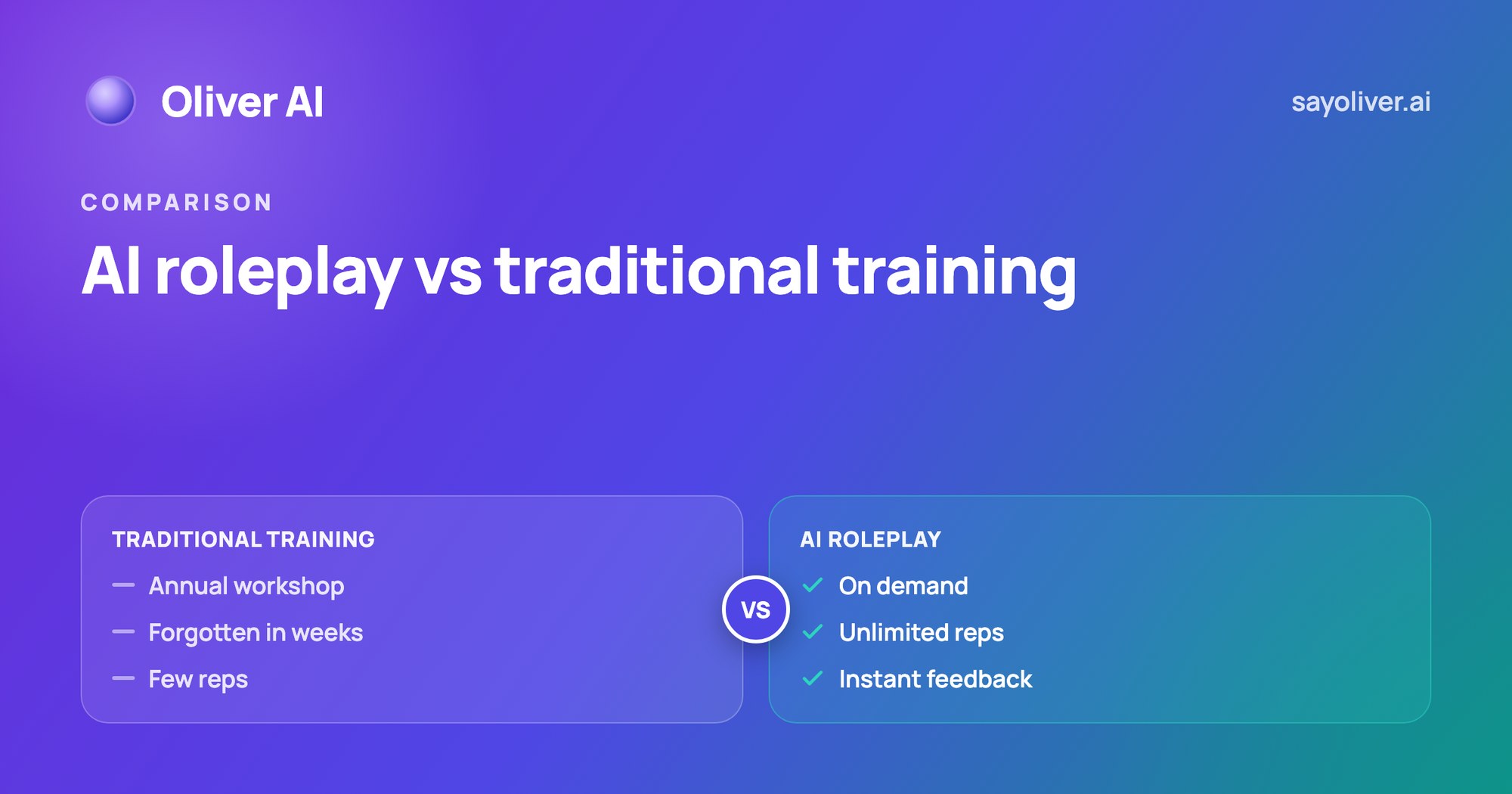
Traditional sales training has two failure modes. The first is the event model: a full-day or multi-day workshop that covers everything, is forgotten by 70% of participants within a week, and produces no measurable change in call quality six months later.
The second is the shadow model: a new rep sits in on calls with a senior rep, absorbs what they can, and then is sent out to try it themselves. The quality of what they absorb depends entirely on the quality of the person they shadowed, and there is no structured feedback loop.
What AI roleplay training does differently
AI role play training is built on a different premise: skills develop through practice with feedback, not through observation or instruction alone. Instead of watching how it is done, reps do it, and get immediate, specific feedback on the attempt. If you are new to the format, start with what AI sales roleplay is.
The AI partner does not go easy. It asks real questions, raises genuine objections, and does not move the conversation forward just because the rep seemed confident. This is closer to deliberate practice than anything most sales teams have access to.
Try a practice call with Oliver, try it now, no sign-up needed.
Try a practice call with OliverThe scorecard advantage
One of the most underrated features of AI roleplay training is the scorecard. After each practice call, the rep gets a structured breakdown: what they did well, where they lost the thread, which questions they skipped, how they handled pressure.
This feedback is tied to the actual conversation, not a general assessment of the rep's skills. Reps can replay the call, see the specific moment things went sideways, and practise the alternative response. That is a learning loop that traditional training cannot replicate.
Who benefits most
AI role play training has the highest impact in three situations: onboarding new reps who need volume quickly, preparing experienced reps for a new product or market, and supporting reps who are working on a specific skill gap identified in coaching.
It is less valuable as a substitute for real deal experience, and it does not replace the judgement that comes from navigating a complex sale over months. It accelerates the learning curve. It does not shortcut the experience.
Try a practice call with Oliver, try it now, no sign-up needed.
Try a practice call with OliverGetting started
The most effective way to introduce AI roleplay training is to start with one of the sales role play scenarios your team struggles with most (a price objection, a difficult discovery call, an at-risk renewal) and make the practice call part of your standard prep.
Ask every rep to run the scenario before your next team meeting, then debrief on the scorecards together. This creates a shared reference point and makes the coaching conversation concrete rather than hypothetical.
AI role play training is not a silver bullet. But for teams that are serious about developing skills, not just managing activity, it solves the core problem that has always held sales training back: not enough quality practice, with not enough quality feedback. That is now fixable.
See it in Oliver
Ready when you are
Practise before the next real conversation.
No sign-up required. Pick the scenario, add your name, and speak with a realistic AI partner. Get a scorecard and transcript after every call.